

Beyond Governance
Terraformings and Other Arts of Cohabiting and Care

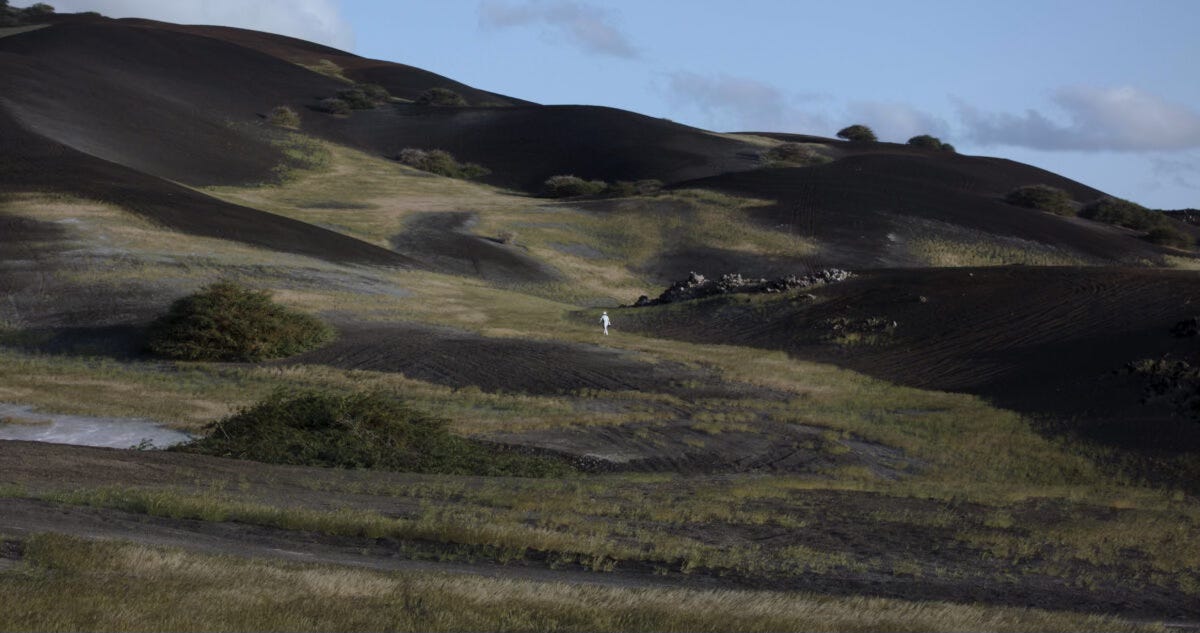
Call for Participation in the Seminar
The planned year-long, online seminar (March 2026-February 2027) addresses the problem of terraforming understood not only as a set of specific techno-scientific procedures, but as one of the master narratives of late Western modernity – a story which in its many guises and variants has sanctioned unrelenting conquest of the worlds of human and non-human others. Organized jointly by Environmental Humanities Laboratory at KTH Royal Institute of Technology in Stockholm and Performativity Department at Jagiellonian University in Kraków, our goal is to collectively develop an open access volume that would be submitted to a major academic press by the end of 2027.
In the 2020s we live in an era of renewed interest in terraforming, which holds sway over our imagination with visions of colonizing other planets or moons as well as developing infrastructure on Earth’s orbit. But there are also those who suggest that in the decades to come we will need to once again terraform Earth to make it hospitable to life again, by alleviating the cumulative consequences of the disruption of planetary ecosystems and climate change. At the same time, more and more communities worldwide struggle to survive, living in the shadow of the great terraforming projects of modernity, such as monocrop plantations, huge infrastructural and industrial projects and modern cities as the main dwelling places of late modernity. Terraforming as a set of technoscientific practices and a master narrative seems to be part of the legacy of modernity that we have to live with, fully aware that any promise of re-establishing the holocenic equilibrium is futile in times of generalized polycrises; a legacy that needs to be rethought for the sake of livable future.
In view of this renewed interest in terraforming, it is crucial to critically reassess this concept, which until recently primarily denoted the practice of making planet(s) habitable and exploitable by humans. But – as has been recently demonstrated by More Worlds Collective in their Fear of a Dead White Planet (2025) – it is equally important to ask the question whether other terraformings are possible; terraformings which would go beyond colonial governance of bodies and land towards arts of cohabiting and care that offer a greater chance of surviving our ongoing ecological, economic and political crises.
To answer the question about possible alternatives to terraforming governance it is crucial to look at such practices from multiple points of view, bringing in approaches that connect, among others, environmental humanities and environmental history, sociology, urban ethnography, geography and political ecology speculative design and speculative fabulations as well as place-based activist and artivist practices. The aim of the seminar is to create a platform for common work across disciplinary divisions, to take a critical look at technoscientific, social and cultural practices as well as narratives about the past, present and future of terraforming(s). These will hopefully shed light on what was left out of the great industrial projects of modernity and erased from public awareness as unwanted consequences of progress, as well as show us what might happen when terraforming ceases to be treated as an instrument of colonization and progress.
We invite scholars as well as artists/activists working in a transdisciplinary, situated and speculative manner to share their work within the thematic scope of the year-long seminar, which will be divided into two parts. In the first half (March-June 2026) we will work towards a common theoretical and methodological basis for the volume, by jointly discussing the recent scholarship, literature and speculative projects pertinent to the topic. In the second half (October 2026-February 2027) will talk about the proposals of the articles written by seminar participants who intend to contribute to the joint volume.
The seminar will take place bi-weekly starting from 13th March 2026, on every second Friday at 14:00 CET on Zoom.
The first full drafts of the articles (7000 – 8000 words) should be submitted until 30th June 2027, while the deadline for the final versions after the first round of editing is 30th October 2027.
Should you be interested in joining the seminar, please let us know at the address mateusz.borowski@uj.edu.pl until 31st January 2026. In your email include your institutional affiliation and the specific topic that you would like to cover within the thematic scope of the seminar.
Confirmations of acceptance and official invitations to the seminar will be sent out until 15th February 2026.